


 Language: English













Solutions
Horse Construction offers full range of structural strengthening materials with technical supports, documentation supports, products supports, project supports.
Carbon Fiber for Structural Strengthening
"Carbon fiber strengthening" is often described as if it were a single product. In practice, carbon fiber–reinforced polymer (CFRP) reaches the site in at least six distinct product forms, each with its own manufacturing process, specification set, and — critically — its own correct application.
This guide explains each product form, its typical specifications, where it is used, and how to select it. It is written for owners, contractors, and engineers who need to speak the same language when specifying carbon fiber.
Carbon fiber strengthening products
Six product forms — match the form to the task
Carbon fiber sheet wrap / fabric / cloth 200 / 300 / 600 g/m² | Carbon fiber plate laminate / strip 1.2–3.0 mm thick | Carbon fiber anchor locks plate and sheet ends anti-debonding |
Carbon fiber mesh mortar-matrix grid (FRCM) mesh 10×10 – 50×50 | Carbon fiber rebar rod / NSM Ø6–25 mm | Carbon fiber jacket pile jacket / sleeve grouted, underwater |
| site-applied (wet lay-up) pre-formed rigid profile | ||
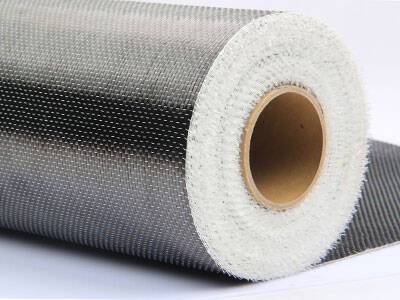
1. Carbon Fiber Sheet / Wrap / Fabric / Cloth
What it is. A thin, flexible, uni- or multi-directional fabric of carbon filaments, typically supplied on rolls and saturated with epoxy on site (the "wet lay-up" method). "Sheet," "wrap," "fabric," and "cloth" are largely the same product class described by different suppliers.
Available specifications.
200 g/m² (nominal thickness 0.111 mm) and 300 g/m² (0.167 mm) — the workhorse grammages
Width: 100 / 150 / 200 / 250 / 300 / 500 mm; roll length 100 m
600 g/m² (0.333 mm) — heavy grammage for higher single-layer capacity
Width: 500 mm; roll length 50 m
Intermediate grammages also available: 230 / 430 / 450 / 530 g/m²
Typical uses. Flexural strengthening of beams and slabs (bonded to the tension face), shear strengthening (U-wraps and full wraps), and column confinement (full wraps) to improve ductility.
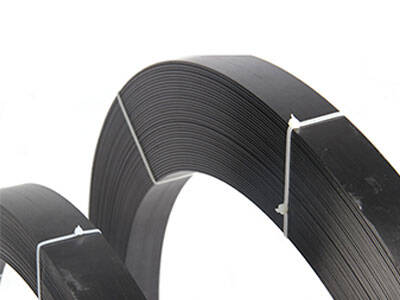
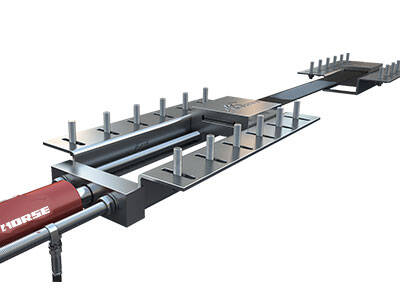
2. Carbon Fiber Plate / Laminate / Strip
What it is. A rigid, pultruded (factory-formed) strip of CFRP, supplied pre-cured and bonded to the structure with a dedicated structural adhesive. "Plate," "laminate," and "strip" describe the same rigid-bar form.
Typical specifications.
Thickness: commonly 1.2 mm / 1.4 mm / 2.0 mm / 3.0 mm
Width: commonly 50 mm / 100 mm
Tensile strength: typically ≥ 2,400 MPa (high-strength) and ≥ 1,800 MPa (high-modulus)
Modulus grades: high-strength (~150 GPa) and high-modulus (~200 GPa)
Typical uses. Flexural strengthening of beams and slabs where higher force transfer and a neat, controlled profile are required; plates carry more load per strip than fabric layers of the same width.
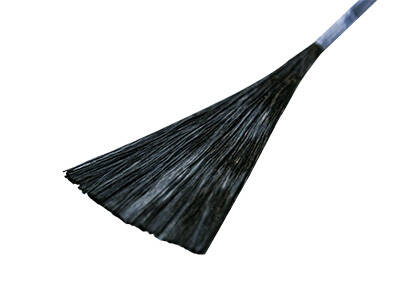
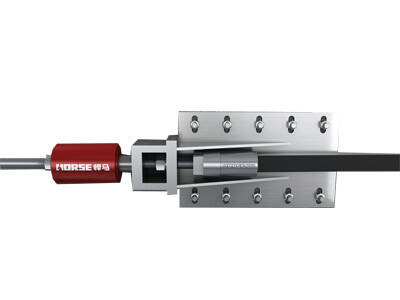
3. Carbon Fiber Anchor
What it is. A short fiber element — often a splayed or looped "fan" of carbon fiber, or a pre-formed anchor — installed to lock a plate or sheet to the substrate at its ends or at critical sections. Its purpose is to resist peeling and end-debonding, which is the dominant failure mode of externally bonded CFRP.
Typical specifications. Varies by system; key parameters are the anchor diameter/width, embedment depth, and the fan/splay angle. Anchors are specified to match the sheet or plate system they secure.
Typical uses. Anchoring the ends of bonded plates and wraps, improving anchorage at laps and around openings, and increasing the usable (debonding-limited) capacity of the retrofit.
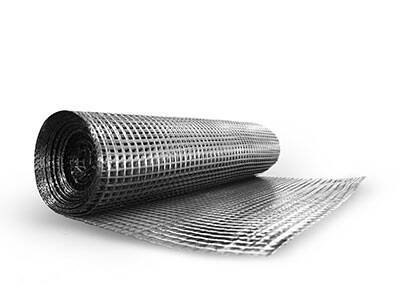
4. Carbon Fiber Mesh / Grid
What it is. An open-weave carbon fiber grid, embedded in a cementitious or polymer-modified mortar matrix rather than epoxy. This "fabric-reinforced cementitious matrix" (FRCM / TRM) approach differs fundamentally from epoxy wet lay-up.
Available specifications.
Unidirectional and bidirectional carbon fiber grids in mesh sizes from 10×10 to 50×50 mm, all rated High Strength Grade I and supplied in widths up to 1000 mm.
Typical uses. Large-area reinforcement of masonry walls, vaults, and slabs; seismic upgrading of brick and stone construction; applications where a breathable, fire-resistant, or alkali-compatible matrix is required and epoxy is unsuitable.
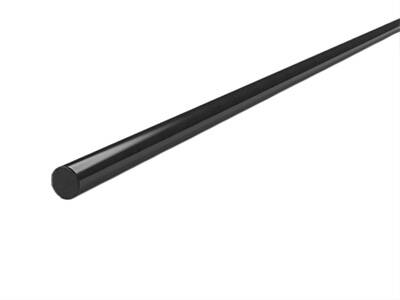
5. Carbon Fiber Rebar / Rod
What it is. A solid, pultruded rod of CFRP (often with a sand-coated or spirally wound surface for bond), used as a non-metallic reinforcement either inside new concrete or embedded near the surface of an existing member (the "near-surface-mounted," NSM, method).
Typical specifications. Diameters commonly from 6 mm to 25 mm; supplied in bars, coils, or cages. Grade and bond surface are the key specification fields.
Typical uses. Corrosion-resistant reinforcement for structures in aggressive environments (marine, de-icing salts), electromagnetically sensitive areas (hospitals, MRI), and NSM strengthening of existing concrete where low invasiveness is required.
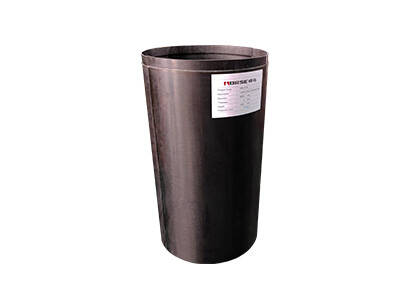
6. Carbon Fiber Jacket / Pile Jacket
What it is. A pre-formed or site-fabricated tubular sleeve of CFRP that encircles a column, pier, or pile. A small annular gap is filled with grout or a structural adhesive so that the sleeve and the core act together. "Pile jacket" refers to the same concept applied to foundation piles, often underwater.
Typical specifications. Defined by diameter, wall thickness, and height/segment length; for piles, the jacket must suit the pile diameter and the marine/soil environment.
Typical uses. Confinement and repair of deteriorated columns, piers, and chimneys; rehabilitation of corroded or damaged piles in splash zones and underwater, where the jacket both strengthens and protects.
You can find anything here you are in need of, have a trust trying on these products, you will find the big difference after that.

High strength carbon fiber reinforced polymer (CFRP) strip / laminate / plate for structural strengthening and concrete repair

Carbon fibre anchor for structural connection and anchoring of CFRP systems

A heavy-duty carbon/glass fiber reinforced polymer(FRP) jacket pile protection system with epoxy grout
